Air Conditioner Leaking Water? What to Do First
No one wants a leaky A/C unit .. but it happens...
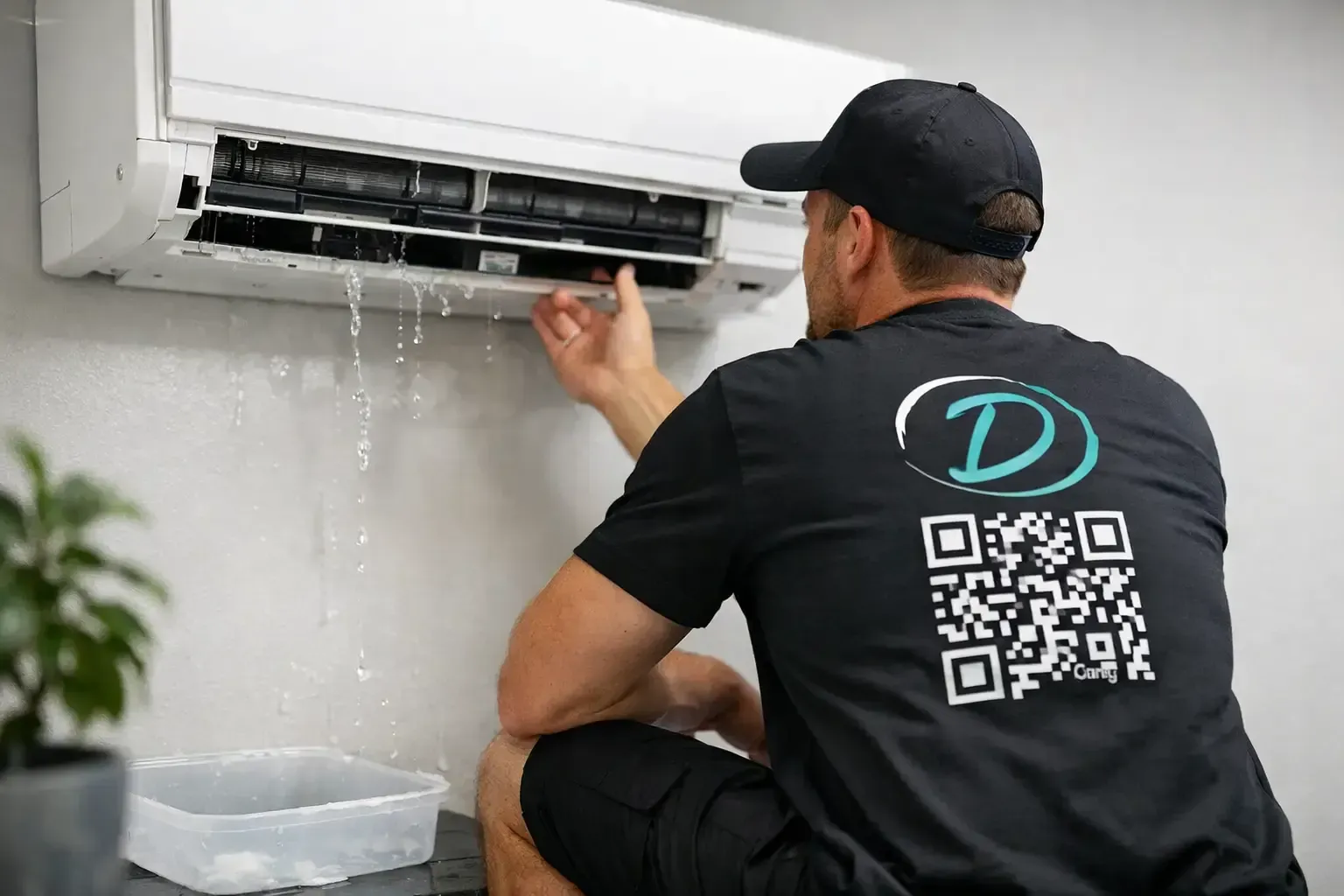
A puddle beneath an indoor unit is never a welcome sight, especially when the Cyprus heat is at its strongest. An air conditioner leaking water is often caused by a drainage problem rather than a major breakdown, but it should not be ignored. Water can mark walls, damage flooring and, if it reaches wiring or sockets, become a safety concern.
The good news is that a few careful observations can help you understand what is happening. Some checks are safe for a homeowner or business operator to make, while others need a qualified AC technician. Acting early protects both your comfort and your property.
First, make the area safe
If water is dripping from the wall-mounted indoor unit, switch the air conditioner off using its remote control. If water is close to a plug socket, electrical cable, consumer unit or other electrical equipment, turn off power to the system at the appropriate circuit only if you can do so safely. Do not touch wet cables or attempt to open the unit.
Place towels or a shallow container beneath the drip to limit damage, then move furniture, electronics and paperwork out of the area. Take a photograph of where the water is appearing. It can be useful to a technician, particularly where a leak is intermittent or has stopped by the time they arrive.
A small amount of water dripping from the outdoor unit can be perfectly normal. In cooling mode, an AC removes moisture from indoor air, and that moisture has to go somewhere. Water leaking indoors, from a ceiling cassette, or through a wall is different and needs attention.
Why is your air conditioner leaking water?
Your air conditioner cools air by passing it over an evaporator coil. As the air cools, moisture condenses on that coil, much like droplets forming on a cold glass. The water should collect in a tray and flow through a condensate drain pipe to a suitable outside discharge point.
When that route is blocked, damaged or incorrectly installed, the water can overflow back into the room. In coastal and high-use areas such as Ayia Napa, Protaras and Larnaca, air conditioners may run for long hours in hot, humid conditions. That makes regular servicing especially worthwhile.
A blocked condensate drain pipe
This is one of the most common causes. Dust, fine debris, algae-like growth and residue can build up in the drain tray or pipe over time. The water has nowhere to go, so it backs up and spills from the indoor unit.
You may notice a steady drip after the system has been running for a while, a musty smell, or water appearing beneath the front edge of the unit. A technician can clear the pipe properly, clean the tray and check that water is flowing freely to the intended outlet. Simply pushing an object into the drain opening can compact the blockage or damage the pipe, so it is rarely a worthwhile shortcut.
Dirty filters causing a frozen coil
A heavily soiled filter restricts airflow. Without enough warm air passing over the evaporator coil, the coil can become excessively cold and freeze. When the ice later melts, the tray may be overwhelmed and water can leak into the room.
Turn the unit off and allow it to defrost completely. If the filters are accessible and you are familiar with removing them, take them out, clean them according to the manufacturer’s instructions and let them dry fully before refitting. Never scrape ice from internal components or use sharp objects inside the unit.
If ice returns after the filters have been cleaned, do not keep restarting the system. The cause could be a refrigerant issue, a fan problem or another fault that requires professional diagnosis.
A cracked or displaced drain tray
The condensate tray is designed to catch water as it leaves the coil. Age, vibration, poor previous repairs or physical damage can cause it to crack or sit out of position. In this case, the drain pipe may be clear but water will still escape before it reaches the outlet.
This is not usually visible without removing covers, which is work best left to a trained technician. The correct repair depends on the unit and the location of the damage. Sometimes a tray can be replaced; in other cases, further work is needed to ensure the unit drains correctly.
Incorrect fall or poor installation
Drain pipes rely on gravity unless a condensate pump is fitted. If pipework is level, rises in the wrong direction, becomes kinked or has come loose, water may not drain away. An indoor unit that is not mounted correctly can also affect the way water runs into the tray.
Leaks that began soon after a new installation, a renovation or indoor decorating work are worth investigating promptly. A proper inspection should look at the whole drainage route, not only the visible section beside the unit.
Low refrigerant or a mechanical fault
Low refrigerant can lead to coil freezing, but it is not something to solve by simply adding more gas. Refrigerant does not get used up in normal operation. If the level is low, there may be a leak that needs locating and repairing first.
Other faults, such as a weak fan motor, sensor problem or pump failure in certain systems, can also lead to excess condensation or freezing. These issues need specialist equipment and safe handling. Continuing to run the AC can increase the repair required.
Safe checks you can make before booking service
Once the system is switched off, look for obvious clues without dismantling it. Check whether the air filters are visibly dusty, whether the water is clean or discoloured, and whether the leak began after a period of weak cooling or unusual noise. If you can see the external end of the drain pipe, note whether any water flows from it while the system has been operating.
It is also helpful to consider when the leak happens. Water that appears only after several hours of cooling often points towards a slow drainage issue. A leak that follows poor cooling and visible ice is more likely connected to freezing. These are clues, not a final diagnosis, but they help the service visit start in the right place.
Avoid pouring chemicals, bleach or boiling water into the unit or its drain line. Strong chemicals can harm components and pipework, while boiling water may distort plastic parts. Avoid covering the leak with sealant as well. The goal is to restore proper drainage, not hide the path the water has taken.
When to call an AC technician straight away
Book professional help promptly if water is coming through a ceiling, the unit has frozen, cooling has noticeably reduced, or water is close to electrics. The same applies if you have cleaned the filters and the leak returns, or if the unit has been installed recently and has leaked from the start.
For offices, shops and larger premises, a leak can disrupt staff, customers and equipment far beyond the immediate area. A ceiling cassette above desks, stock or electrical systems deserves urgent attention. Planned maintenance is particularly valuable for business spaces because blocked drains and dirty filters are often found before they cause a visible leak.
Dutchess Oceanus Property Services can assess the source of the problem, clear and test drainage, and advise where an installation adjustment or repair is needed. The aim is not merely to stop the drip for the day, but to leave the system cooling reliably and draining as it should.
Preventing future water leaks
Most indoor water leaks are preventable with routine care. Clean filters regularly during the cooling season, especially if the system runs daily, windows are often open or there are pets and building dust in the property. A professional service should include checking filters, coils, the condensate tray, drain pipework and overall operation.
There is no single timetable that suits every property. A lightly used bedroom unit may need less attention than AC serving a busy office, rental property or business centre. However, arranging maintenance before the heaviest summer use gives any small drainage or airflow issue time to be corrected before it becomes an uncomfortable emergency.
A dry, properly draining unit is part of the quiet comfort good air conditioning should provide. If you see a drip, treat it as an early warning, keep the area safe and arrange the right help before a small pool of water becomes a larger property problem.